
- Download Issue 65 (US Letter, 7,8 mb) Buy as Book on Demand here (US) and here (DE)

by Dorothee Mosters
Tracing
The symposium “Voicing the Commons: Participatory Art and New Public Imaginaries” marked the conclusion of the transnational project if walls could tell, initiated and artistically directed by Mischa Kuball, whose work has for decades consistently examined the relationship between art, the public sphere, and communal responsibilities. The long-term project exemplifies an artistic practice that does not remain within the protected space of the museum, but deliberately enters the public realm, embracing uncertainty and encounter.
In Sarajevo, Bucharest, Skopje, Chișinău, Ljubljana, Kraljevica, and Čačak, simple white walls were installed. Reminiscent of institutional architectures, they nonetheless stepped beyond them, exposing themselves to the traces of everyday life, the city, and its inhabitants. Initially empty and open, these white surfaces became projection screens for urban reality: they absorbed dust, lettering, shadows, and touch - unplanned, spontaneous human traces. Over time, they collected signs of the present, allowing climate, movement, and social life to inscribe themselves before carrying these impressions back into institutional contexts.
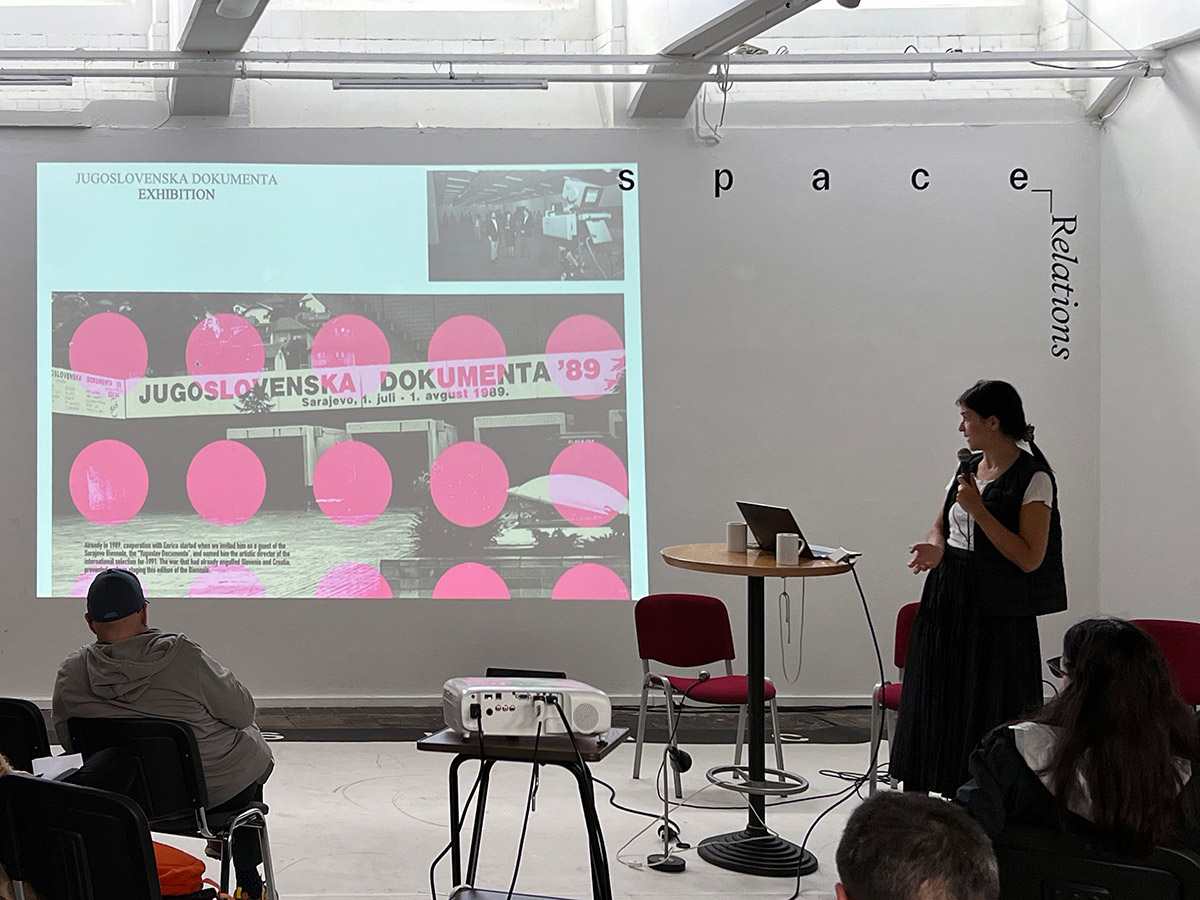
Senka Ibrišimbegović, Ars Aevi Museum of Contemporary Art, Sarajevo, Photo © Archiv Mischa Kuball, Düsseldorf 2026.
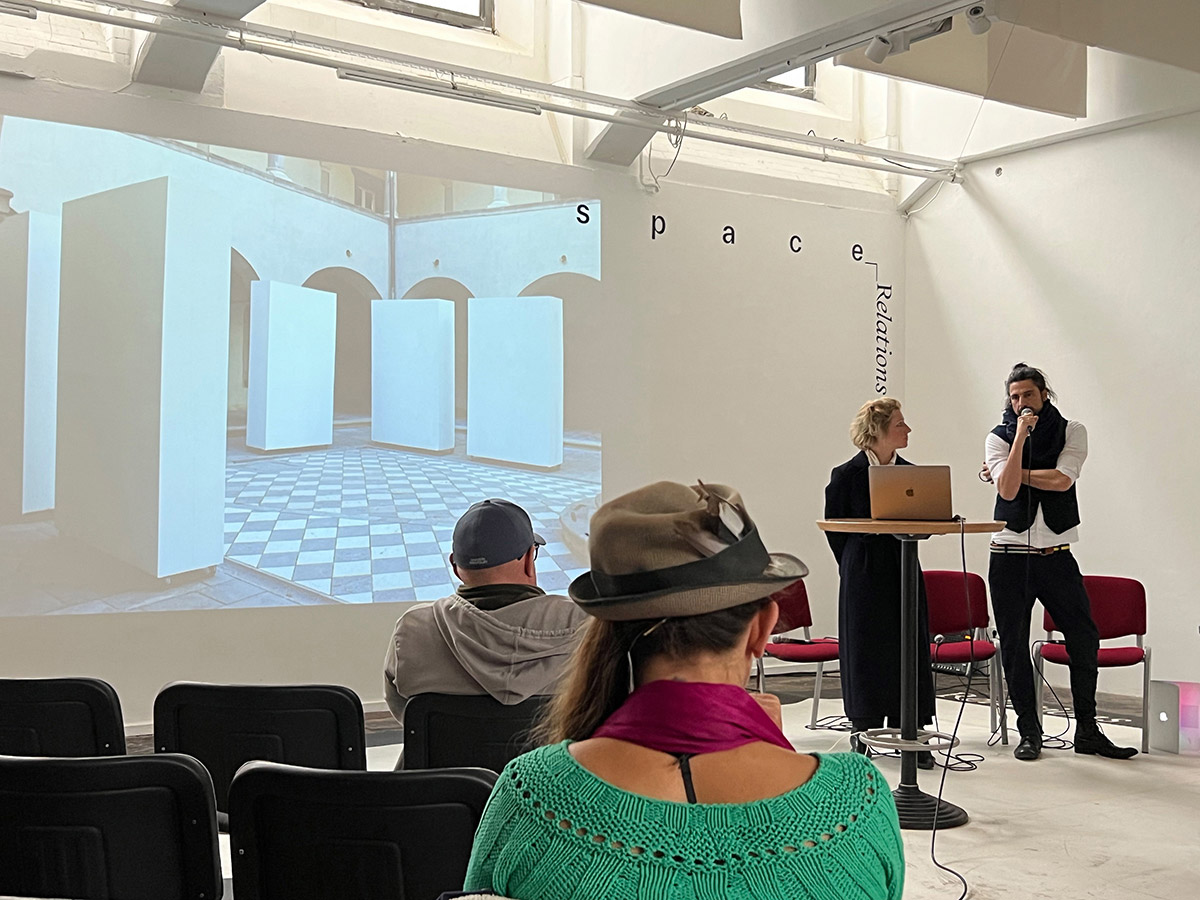
Lina Franko and Andi Slawinski, Frankopan Castle, Kraljevica, Photo © Archiv Mischa Kuball, Düsseldorf 2026.
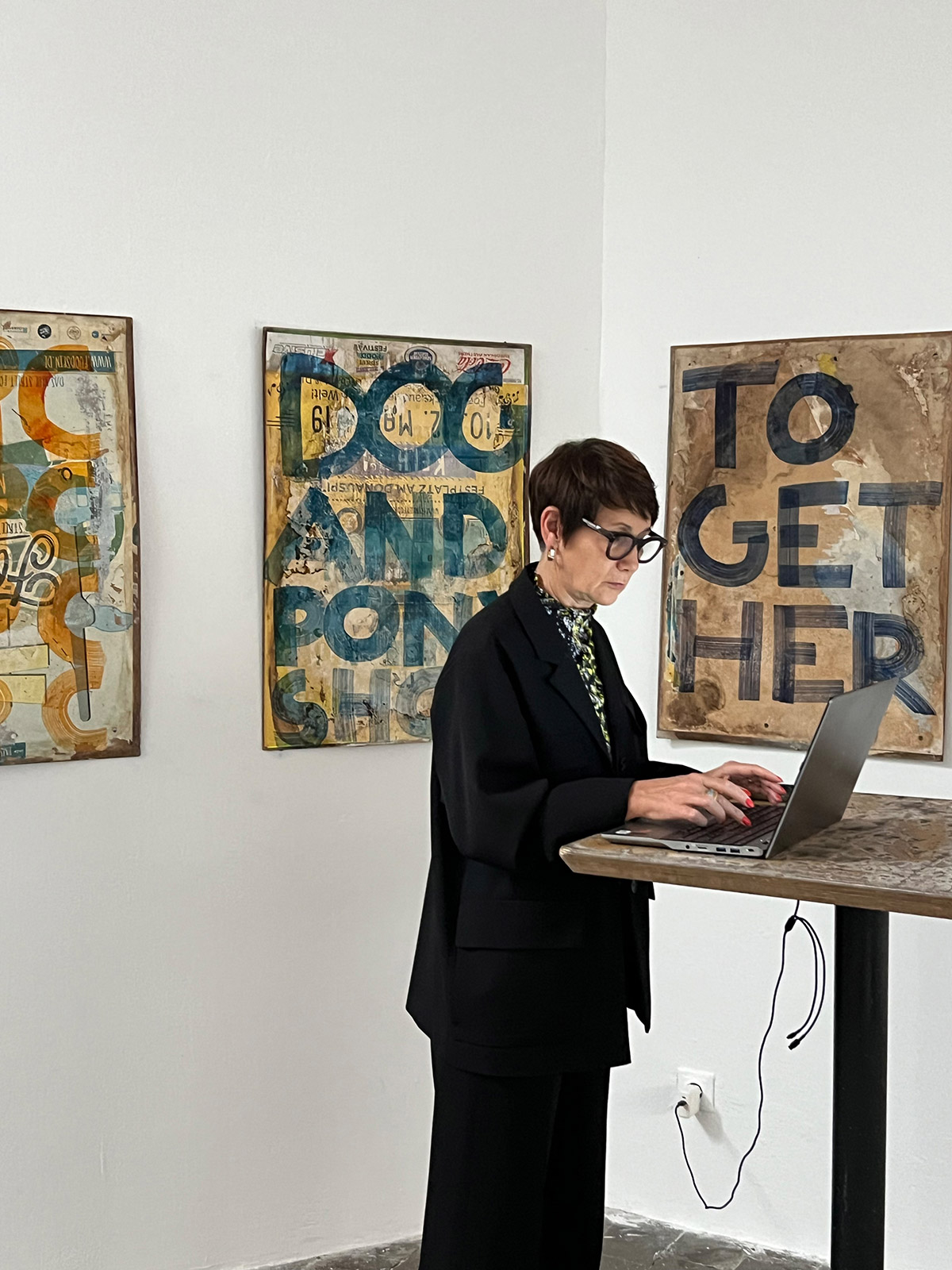
Simone Voigt, Goethe Institut Sarajevo. Photo © Archiv Mischa Kuball, Düsseldorf 2026.
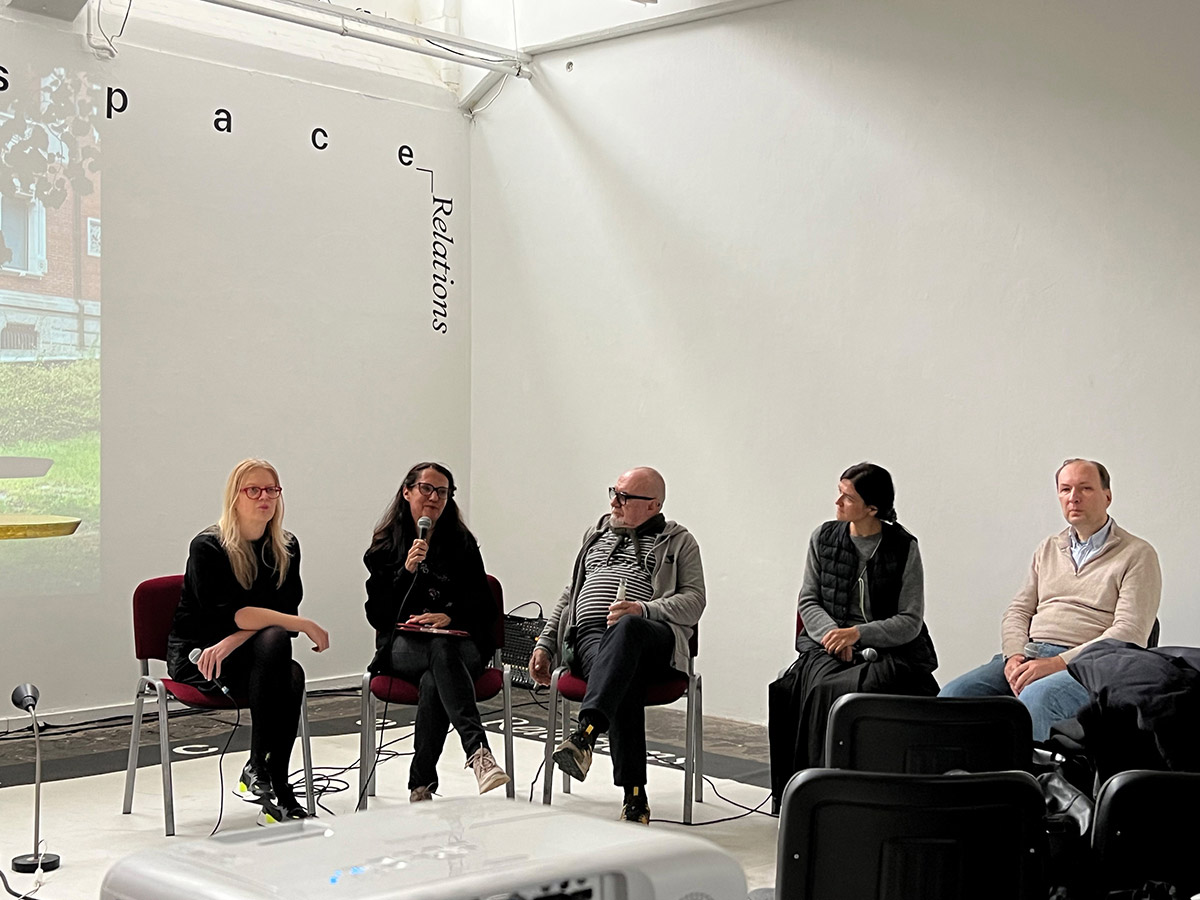
Panel discussion with Branka Benčić, Mojca Puncer, Călin Dan, Senka Ibrišimbegović and Zoran Erić, Photo © Archiv Mischa Kuball, Düsseldorf 2026.
What emerges here is not merely an aesthetic gesture, but a social cycle. Art leaves the institution to listen to the world outside and returns transformed by what it has encountered. Museums and galleries become resonance chambers, places in which the public sphere is not fixed, but continuously renegotiated. It opens spaces for speaking and listening, for disagreement and exchange, via spaces in which participation can be experienced and relationships can form across difference.
At a time when walls - both visible and invisible - are rising once again, the decision to keep these walls white and open becomes a powerful gesture. They invite us to reconsider what we hold in common and to inscribe ourselves into shared spaces rather than sealing ourselves off. In this sense, if walls could tell reflects both the transience of opinions and traces, and the enduring significance of human gestures and actions.
The decision made by Kuball and his team to situate the project and include non-EU countries takes a clear position. It seeks dialogue precisely where divisions become visible, not to erase them, but to give them space. This approach avoids easy solutions; it is grounded instead in dialogue, trust, and perseverance. Such an attitude is neither self-evident nor incidental, but it is an artistic and human quality cultivated through years of sustained engagement.
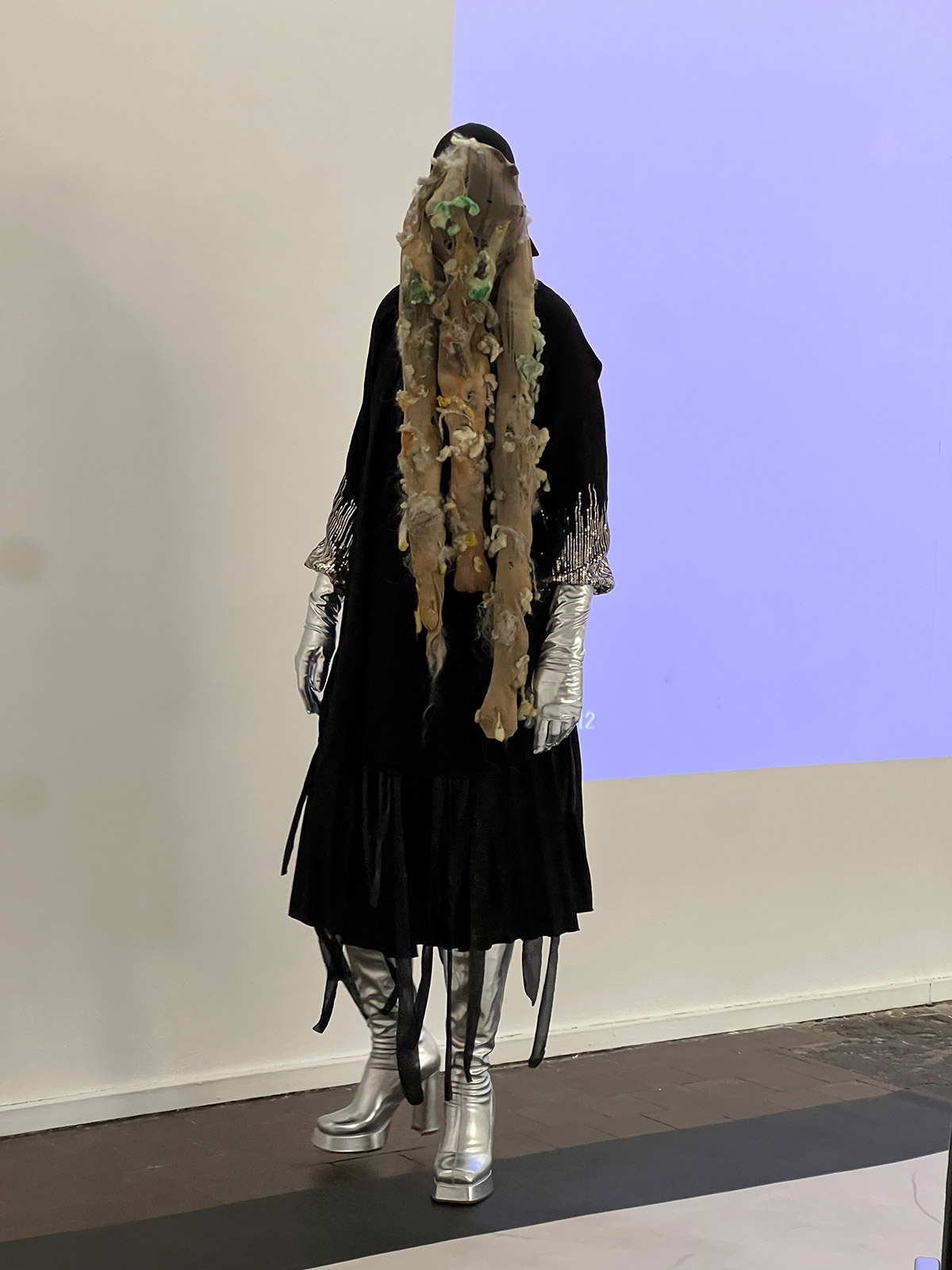
Performative Intervention by Mohamad Moe Sabbah
From his library installation in Tirana in 2006 to his performance in Bihać, Kuball has long addressed questions that have since moved to the centre of broader cultural debate: the role of art institutions, the meaning of participation, and our shared responsibility for the public sphere.
The Kunststiftung NRW has consistently supported projects rooted in dialogue and exchange. We encourage artists and institutions to take risks and to experiment. For us, if walls could tell exemplifies what we understand as urgent and meaningful art funding: supporting projects that transcend boundaries between countries, disciplines, institutions, and publics. We fund not only artworks, but processes: the building of networks, the courage to experiment, and collective reflection on social responsibility.
This is especially the case in times of growing political polarization, both internationally and in Germany, as we believe that art must remain a space in which common ground is not prescribed but negotiated; a space where dissent can be productive and where listening is as vital as speaking. As a foundation, we are grateful to accompany artists like Mischa Kuball, who remind us that art is not a closed system, but a living organism. We would like to thank all partner institutions and the following committed, thoughtful representatives who made this project possible; Senka Ibrišimbegović, Virgil Ştefan Niţulescu, Vladimir Janchevski, Lilia Dragneva, Dumitru Carbuni, Blaž Peršin, Lina Franko & Andi Slawinski, and Predrag Živković.
Dorothee Mosters has been Head of Visual Arts at Kunststiftung NRW since October 2018, a role she has shared in dual leadership with Jasmina Merz since 2022. In this position, they oversee numerous funding programs for artists and curators, institutions, and project spaces in Germany and abroad.