
- Download Issue 65 (US Letter, 7,8 mb) Buy as Book on Demand here (US) and here (DE)

by Blanca de la Torre
Porous Walls: Curating Participation, Repair, and Ecological Care
Introduction
For me, curating is an expanded artistic practice and an epistemic artifact. It is a cognitive device for extradisciplinary research and the activation of critical, creative methodologies. From a deeply collaborative perspective, curatorial practice is a space for the collective production of knowledge and for situated action, where discourses are shaped through dialogue, shared attitudes, affects, desires, and ways of doing. In the last decades, participatory practices have become a central strategy in contemporary art for engaging complex social and environmental issues. Rather than debating fine-grained distinctions between “participatory” and “collaborative” (a terrain many authors have mapped), this essay foregrounds their shared capacity to construct new narratives, create productive short circuits in response to contemporary climate challenges, and open spaces of encounter, experimentation, and disruption oriented toward an ecosocial transition.
Curating collaborative artistic practices, I argue, is not only a mode of representation but a mode of world-making, a way to imagine post-fossil alternatives, activate reparative frameworks, and transform present conflicts into possibilities for sustainable and collective care. These practices prioritize process over object, collaboration over singular authorship, and experience over representation. They make knowledge collectively and situate it within specific contexts. Drawing on a selection of projects from my curatorial background, this essay traces three overlapping frames: institutional experiments, workshop/laboratory formats, and multispecies participation, to show how participatory strategies can reconfigure power, action, and responsibility in public life.
Mischa Kuball’s if walls could tell sits naturally within this frame. His public‑space, participatory methods activate walls as porous sites of memory, testimony, and civic agency. They could be seen as surfaces that record, open, and repair rather than simply enclose or display. Kuball’s interventions complicate curatorial temporality by privileging durational engagement, collective testimony, and weathering over discrete openings and foregrounding public agency as co-authorship. In doing so, his practice exemplifies how walls in the city can be reframed as infrastructures for social listening, repair, and ongoing civic negotiation rather than inert backdrops.
This essay opens with institutional and programmatic experiments that sought to bend museum rhythms and foreground process; it then examines workshops and open laboratories as formats to translate scientific, local, and embodied knowledge into public action; and it concludes with explorations of multispecies and non‑human participation that unsettle anthropocentric assumptions. Along the way I suggest practical and ethical reflections for curating participatory and collaborative art projects, lessons that resonate with Kuball’s project and with the broader stakes of activating walls as both civic and reparative surfaces.
PRAXIS Program and New Institutionalism
In 2010, I launched PRAXIS as a long‑term program for projects that would rarely find room within a conventional museum. Installed in one of the monumental temporary halls of ARTIUM, the Contemporary Art Museum of the Basque Country in Vitoria-Gasteiz, PRAXIS was conceived as an organic zone set apart from the institution’s usual rhythms: an experimental enclave that challenged assumptions about openings and closings, hidden-installation processes, intolerance of error, rigid calendars, and the demand for finished, fetishized objects. Instead, the program foregrounded reuse (artists worked with remnants of earlier exhibitions), low‑waste practices, visible process, care, and a non‑consumerist ethic. PRAXIS operated as an open laboratory whose flexible temporality and hybrid programming disrupted institutional logics and reconfigured authorship as shared practice.
Rooted in DIY values (i.e. recycling, self‑production, relationality), PRAXIS quickly moved toward a DIT (Do It Together) orientation that emphasized collective agency and co‑creation over individual maker narratives. The program deliberately blurred roles among artists, staff, and publics: installation and production took place in view of visitors; rules were bent to allow unpredictability and play; and the museum became a site for ongoing experimentation rather than a container for completed objects. This reframing staged the museum as infrastructure for civic practice and cultivated a new institutionalism attentive to process, repair, and communal responsibility.
Jenny Marketou’s Paperophanies (2011) stands as the program’s emblematic example and a key articulation of my curatorial approach. Marketou installed an atelier inside the museum where participants (including museum visitors and local residents), and activist groups co‑designed slogan‑bearing garments from a unisex pattern. Through a sequence of collaborative workshops, they cut, stitched, and inscribed messages of solidarity and protest; the garments remained on display until a public street demonstration activated them as wearable banners. By routing creation through collective workshops and then moving the work into the streets, Paperophanies collapsed the boundary between exhibition and action, object and event. As a participatory project, Paperophanies exemplifies several linked concepts central to PRAXIS: first, material reuse and non‑fetishized objects (the garment is a functional sign, not a commodified artifact); second, shared authorship and visible process (the atelier made the process of making itself legible); third, institutional redistribution of agency (the museum produced networks and capabilities that extended into public space). The work also reframes participation as political identification: clothing becomes a medium for collective address and the city becomes an expanded stage for the museum’s experiments.
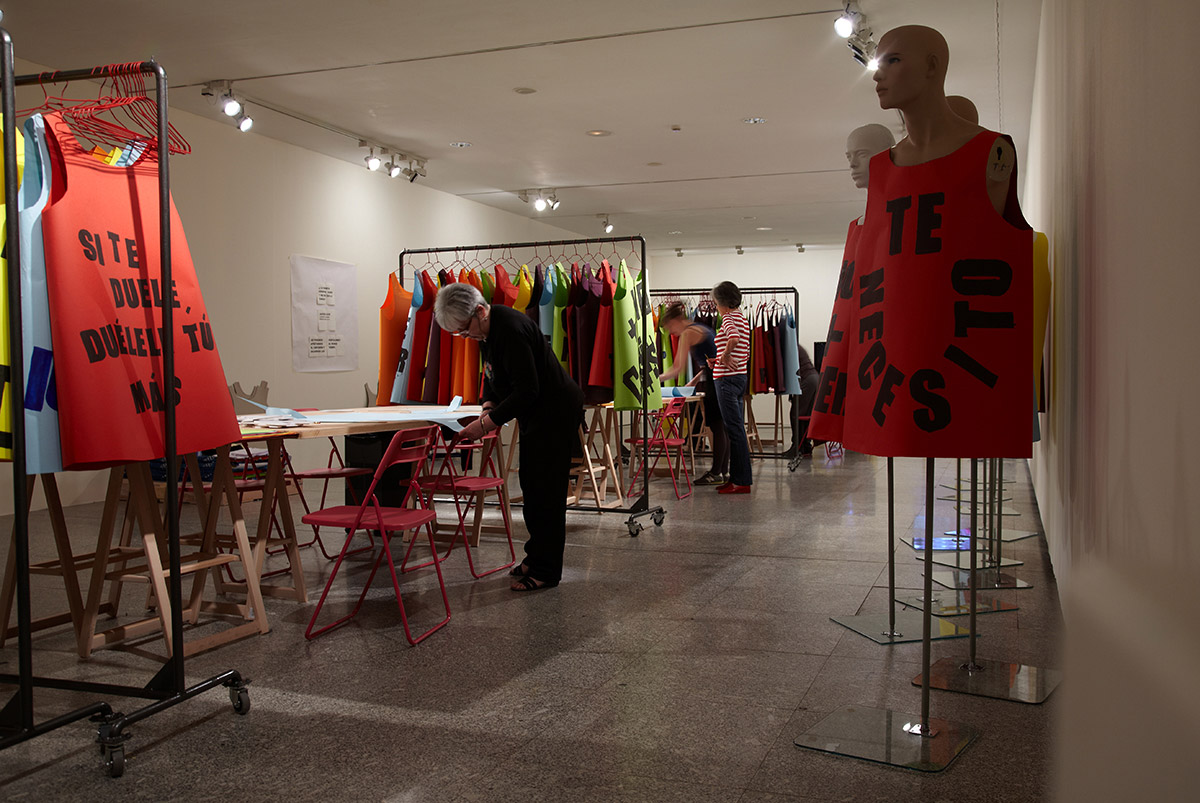
Jenny Marketou, Paperophanies, 2011
Ultimately PRAXIS’s openness generated strengths and tensions. Visible production invited publics into decision‑making procedures but required sustained facilitation and ethical attention to who participates and whose voices are amplified. The reuse imperative prompted creative economies of material but also logistic complexities in conservation and safety. These frictions, however, are instructive: they reveal that participatory curating requires not only inventive formats but also ongoing labor in mediation, care, and institutional negotiation, practices that transform museums into platforms for collective learning and civic repair.
Hybris as a Socio‑ecological Framework for Participation
Hybris, shown at MUSAC, the Contemporary Art Museum of Castilla y León, was conceived not as a single narrative but as a constellation of positions mapping the tensions, contradictions, and possibilities of the ecological crisis. Structured in three permeable chapters: Solutions (restorative aesthetics/ecovention), Reuses (working with discarded or natural materials), and Actions (performance and collaborative practices), the exhibition prioritized projects that enact ecological thinking through collective processes rather than represent it as an object.
Several emblematic works anchored the show’s argument that participation and collaboration are not merely modes of audience inclusion but material strategies for ecological repair and long‑term stewardship. Joseph Beuys’s 7,000 Oaks (1982) functions paradigmatically: its social‑sculpture logic redistributed labor and responsibility across institutions, students, and citizens, turning tree‑planting into a durable civic infrastructure. The work’s durability and dispersed authorship model how ecological projects extend beyond the gallery into situated, co‑produced landscapes.
Agnes Denes’s Tree Mountain -– A Living Time Capsule (1992) amplifies this temporal and legal dimension. By structuring a planted mountain through mathematical patterning, securing custodial rights across generations, and framing tree‑planting as an act of collective custodianship, Denes foregrounds participation as intergenerational obligation and ecological governance rather than single‑event performance.
Amy Balkin’s Public Smog (2004-) and Lucía Loren’s Api Sophia (2017) operate as hinge figures between policy, material practice, and local community engagement. Balkin translates legal and financial tactics into a participatory intervention that questions atmospheric commons; Loren converts the museum courtyard into an urban ecology, mobilizing local associations and visitors around beekeeping and shared stewardship. Both projects show how participation can materialize as juridical action, community care, and site‑based exchange.
In the Reuses and Actions clusters, projects that embedded collaborative processes in production and fieldwork illustrated different vectors of participation. Maider López’s project Zoom In (2016) uses workshops and teamwork to redistribute attention, skill, and authorship. Tiles made with students in Cappadocia make landscape attuned collective models of adaptation to environmental constraints. Amor Muñoz’s Community Laboratories (Yuca_Tech, Oto_Lab, Chiapas‑Tech, 2014-2016) emphasize shared making and technological autonomy — participation here is knowledge exchange and co‑fabrication that builds local capacity and relational resilience.
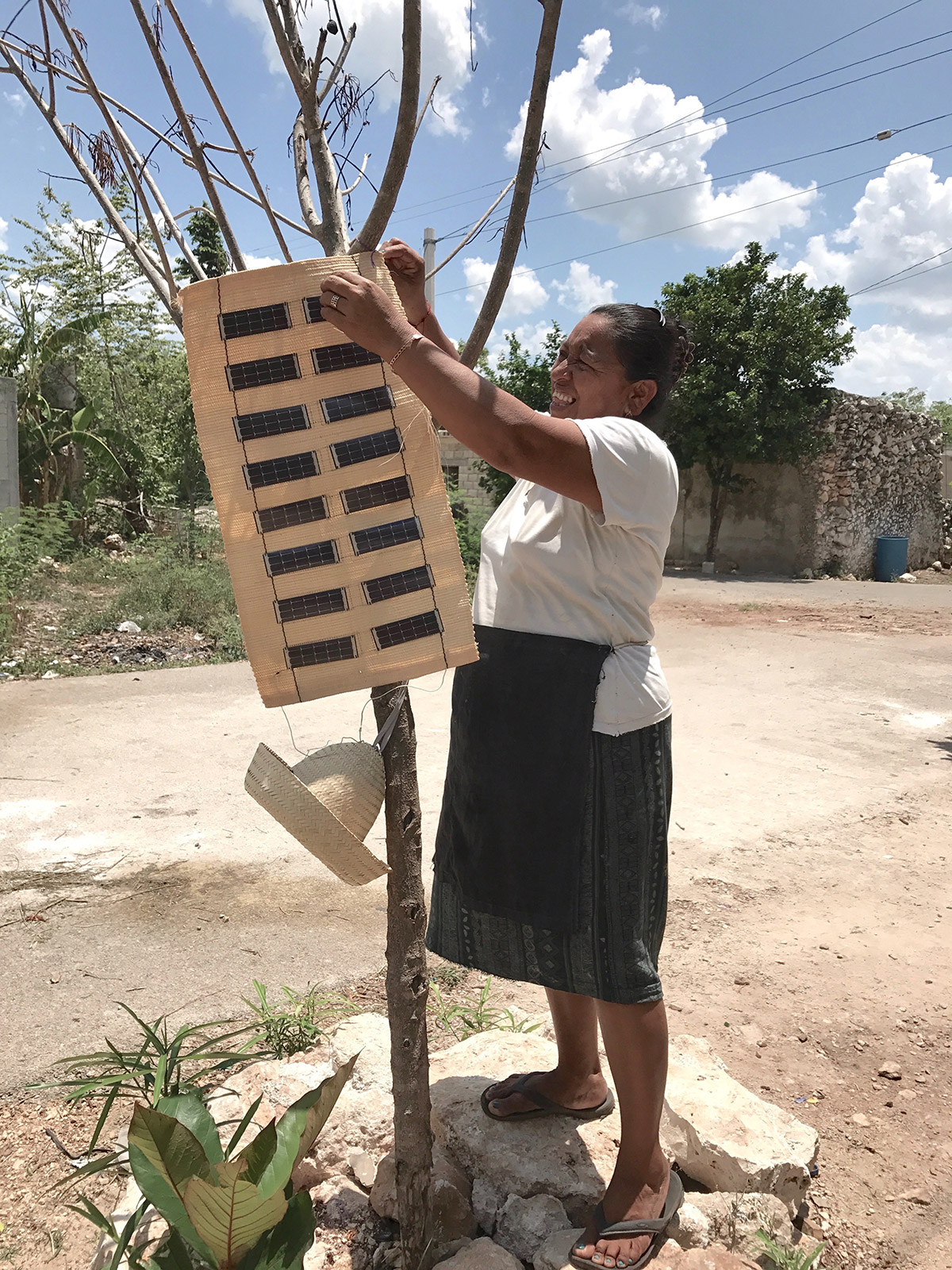
Amor Muñoz, Yuca_Tech, 2014–2015
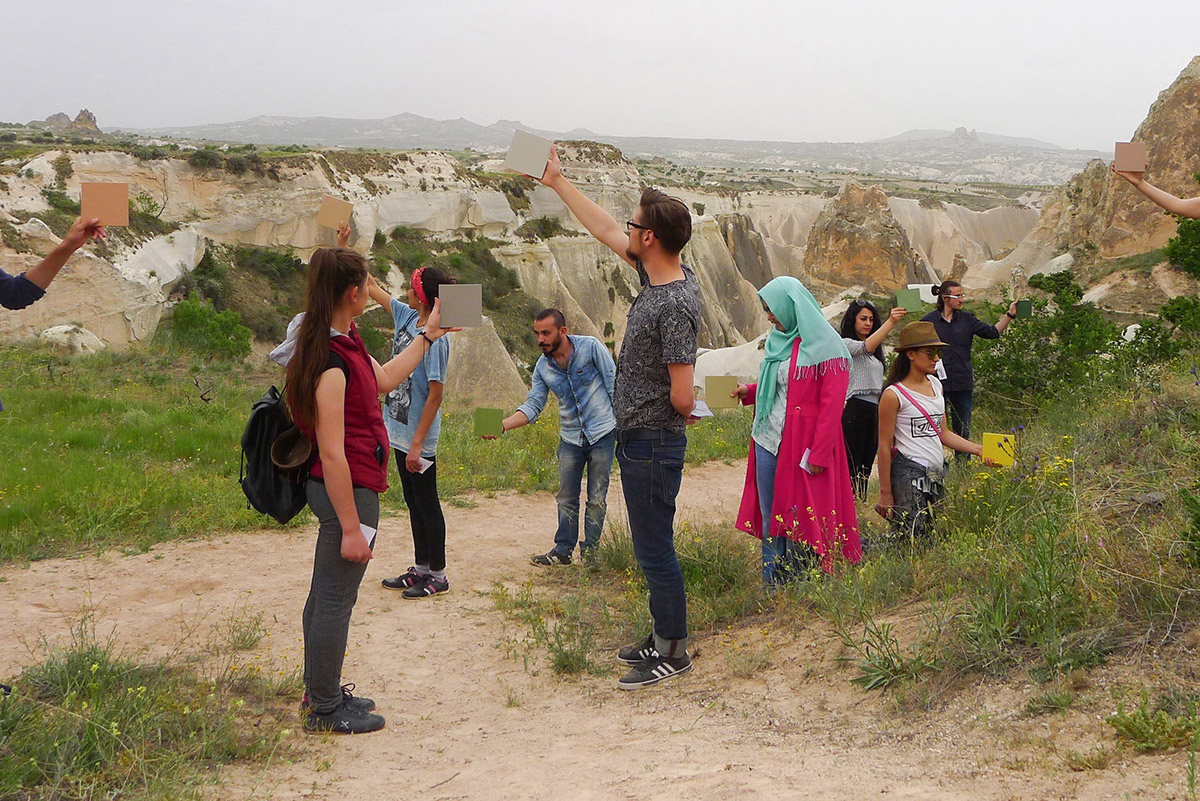
Maider López, Zoom In, 2016
In some collaborative practices, long-term participation and alternative temporalities are essential, and seeds frequently emerge as shared material. They operate as a powerful metaphor for the need to slow down in opposition to the contemporary obsession with immediacy, an urgency that ecological projects actively resist. This approach is evident in the work of Hiroshi Sunairi and Carma Casulá. Casulá’s long-term research project, Monsanto Is Not a Saint of My Devotion (2012–2025), constitutes a Bank of Farmers’ Memory focused on traditional agricultural knowledge and familial relationships to land. For over a decade, Casulá has invited farmers to contribute self-produced seeds, agricultural tools, and personal narratives related to cultivation, carefully documenting the origins, practices, and lived experiences surrounding seed collection and preservation. Similarly, Sunairi’s Tree Project (2006–) closes the loop between memory, transnational care, and multisite participation. By collecting and distributing hibaku‑jumoku seeds and tracking their growth globally, the project enacts collective caretaking that links ecological regeneration to histories of violence and survival; its distributed authorship and lived continuations, including the personal planting I undertook, illustrate how participatory projects persist as practices of relational stewardship.
Across these selected works, Hybris advances three linked claims about participatory practice: participation redistributes agency and responsibility beyond curated moments into infrastructures of care and governance; collaborative processes reframe artworks as living protocols (durational, replicable, and legally or institutionally embedded); and participatory formats unearth ethical and logistical tensions (mediation, equity of voice, material safety) that must be worked through as part of curatorial labor. Hybris therefore treated participation not as an additive feature but as a curatorial strategy that remakes institutional temporality, accountability, and publics in order to practice ecological repair.
The Workshop as a Format: The Water Office
The Water Office (2019) addressed global water challenges through participatory artistic practices that treated art as both a tool for action and a critical frame for inquiry. The workshop format functioned as laboratory, collective research exhibition, and site of civic engagement; participation meant active involvement of communities, collaborators, and institutions in producing situated knowledge, not mere audience attendance.
The exhibition operated as an open lab that made processes visible and shared tools, protocols, and outcomes. Juanli Carrión’s pH Series translated chemical analysis into a collaborative, sensory language. Using locally grown purple cabbage to produce pH‑sensitive dyes, Carrión and collaborators tested water samples from Washington (DC) and impregnated cotton fabrics with the resulting chromatic scales. The installation displayed both final textiles and process materials, rendering scientific method legible and inviting publics into hands‑on interpretation of contamination.
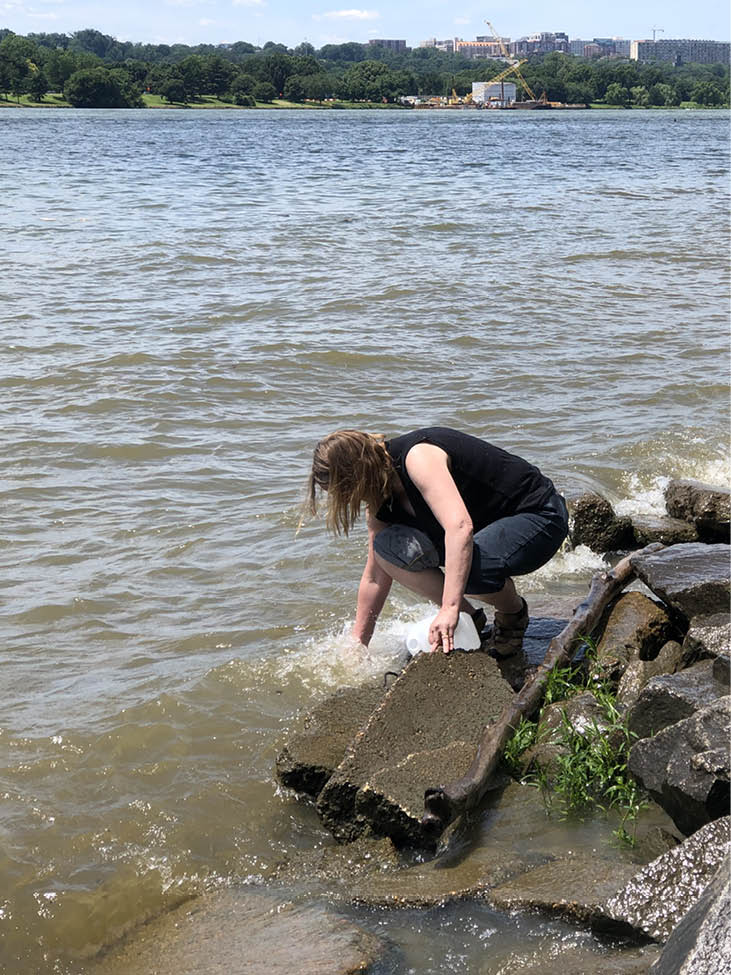
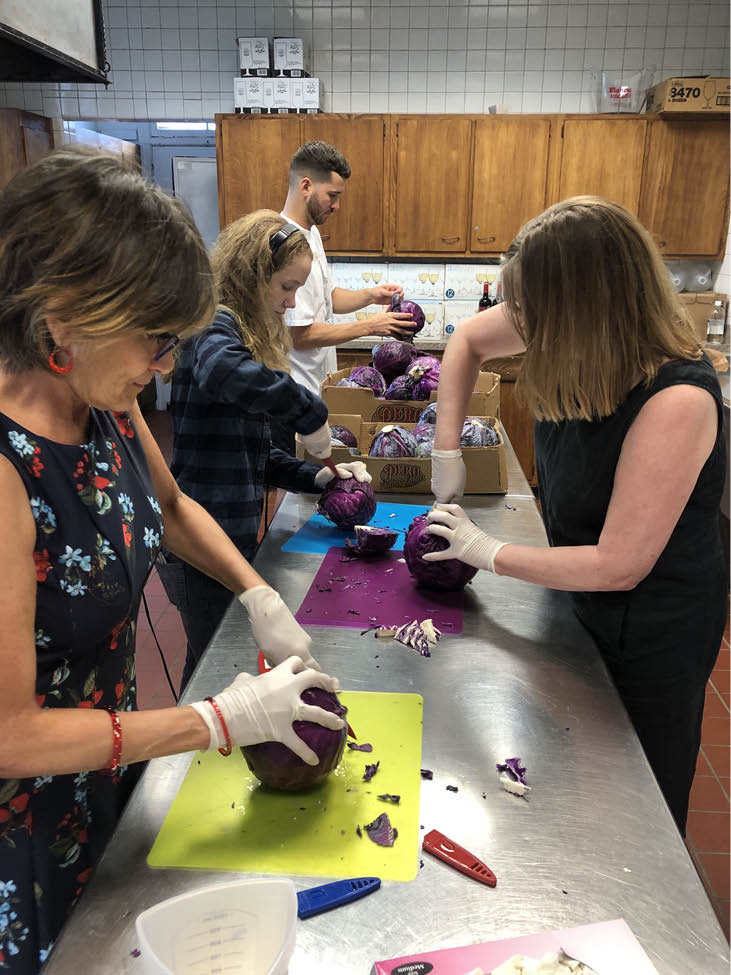
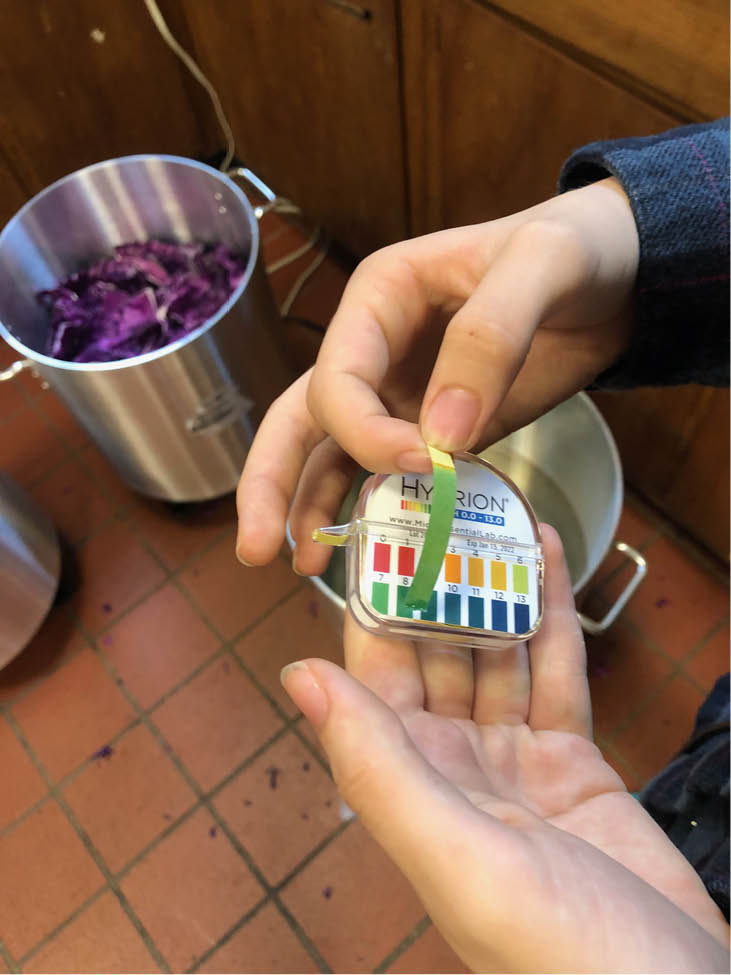
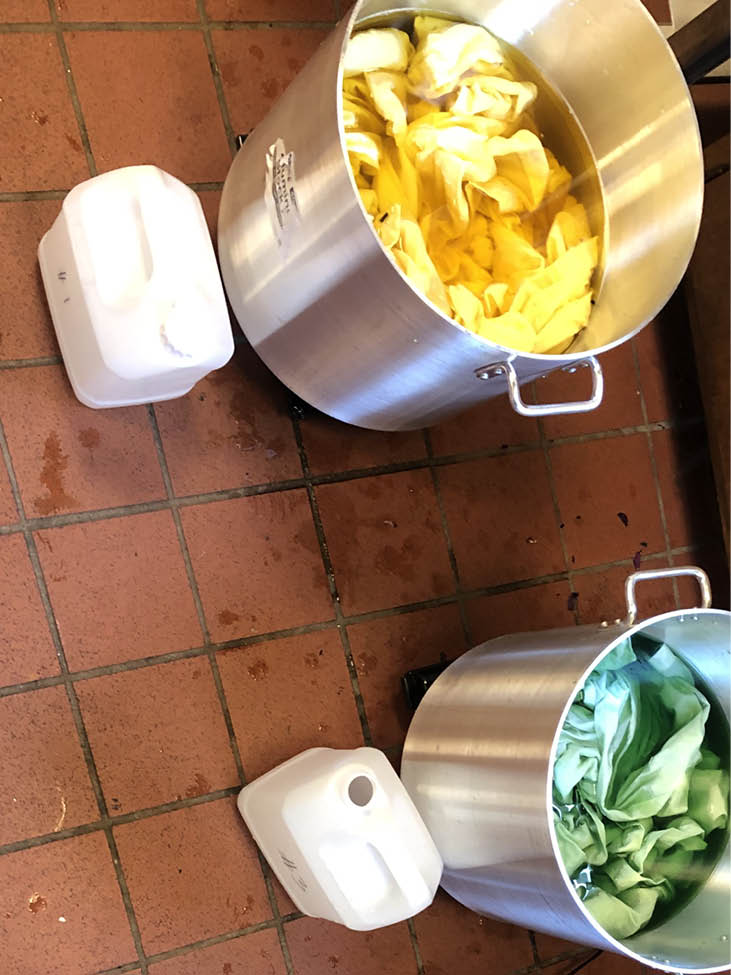
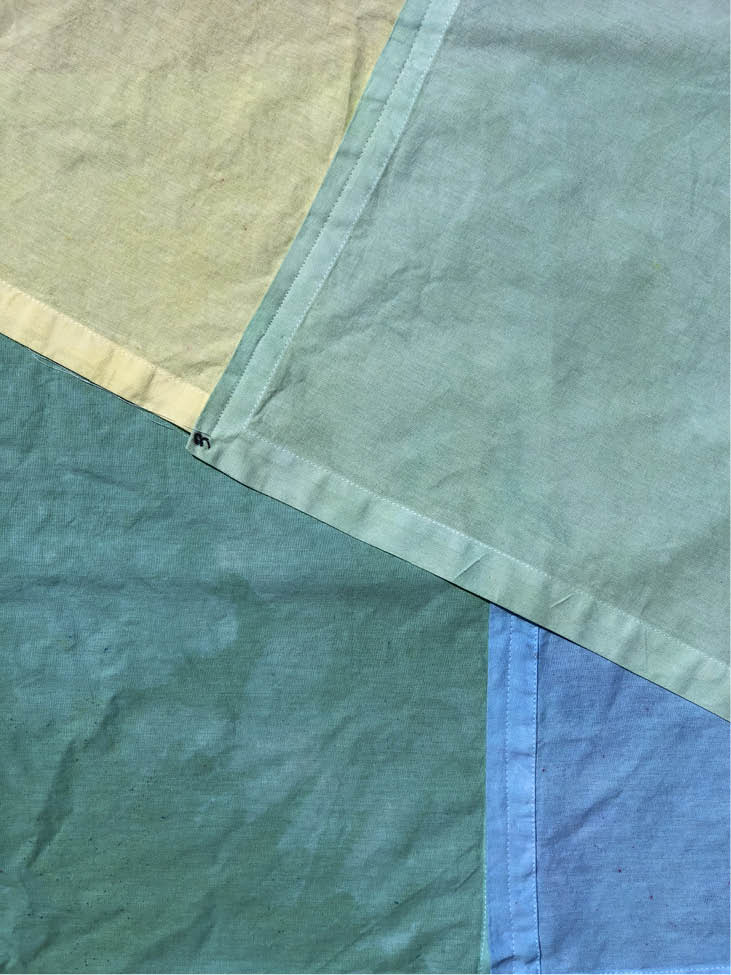
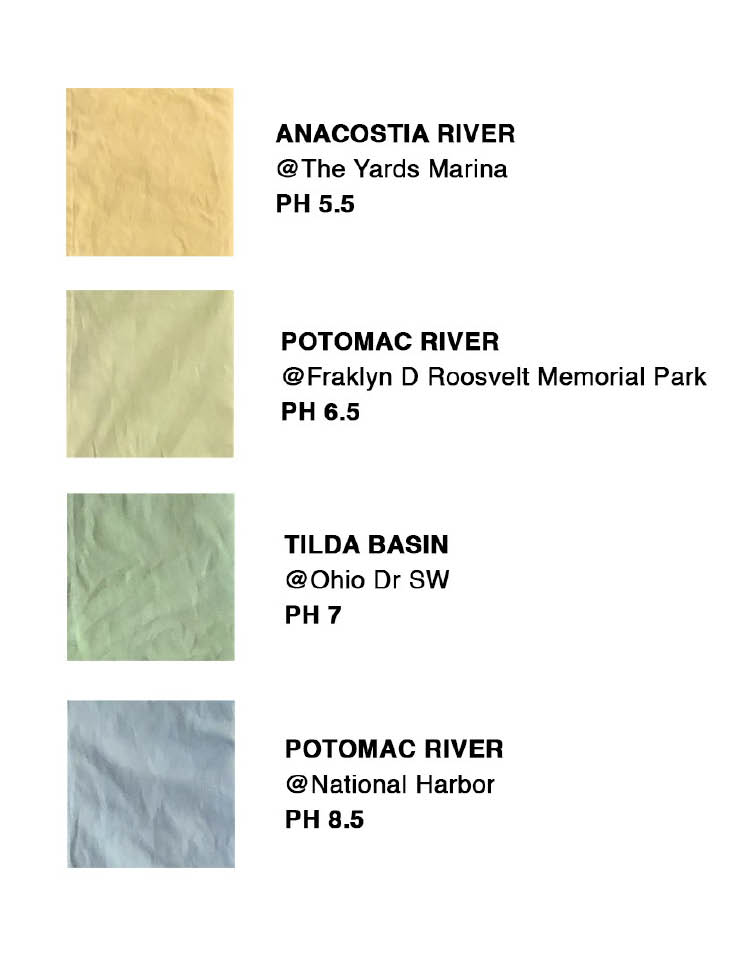
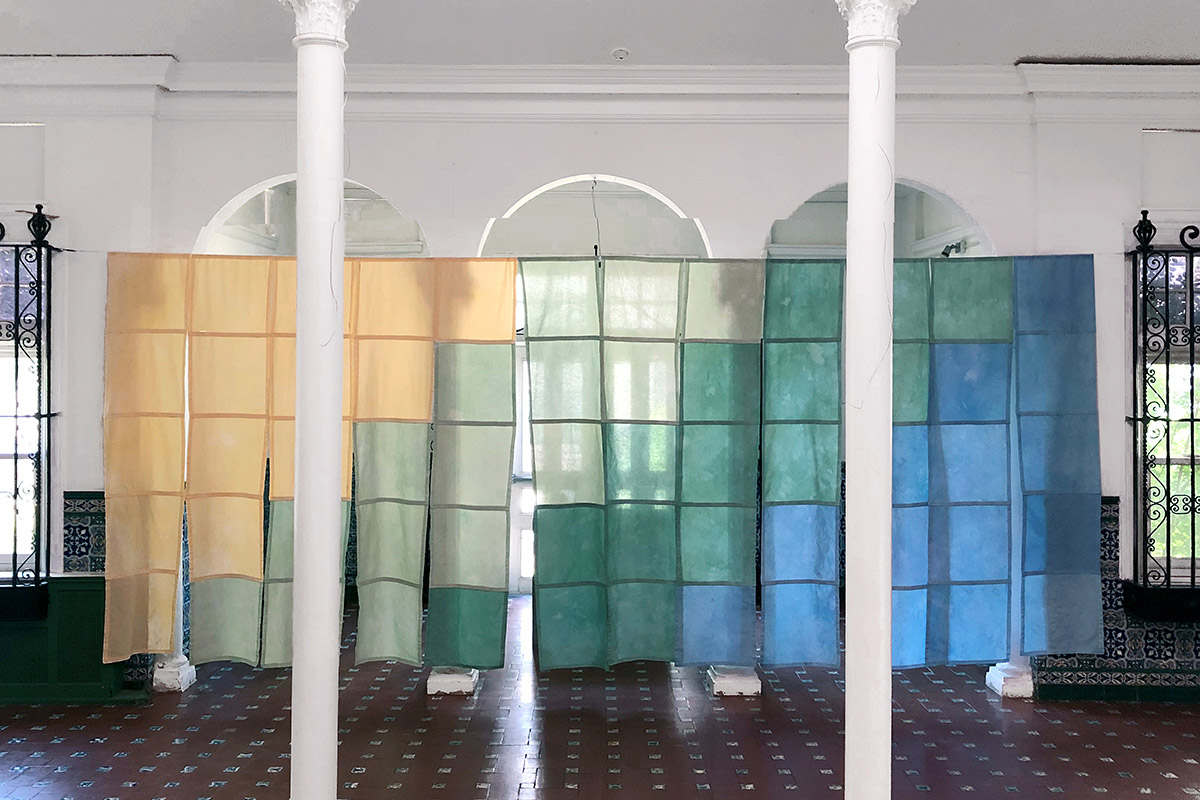
Juanli Carrión, pH Series, 2019
Juan Zamora’s The Coliform Project: Performing Water converted microbiological data into performative notation. Working from water samples collected with the Potomac Riverkeepers Network, the artist and volunteers cultured bacteria in a boat laboratory and transformed growth patterns into musical scores. The subsequent performance and recorded sound became part of a layered installation that extended participation into auditory and temporal registers, showing how embodied, collaborative protocols can translate scientific evidence into civic narratives.
Basurama and Rachel Schmidt’s Water Memories Itinerant Office centered storytelling and collective memory. Participants contributed personal water narratives and objects that were archived as time capsules in multiple media. The project reframed hydrological systems as entangled with industry, transport, and waste, and foregrounded experiential testimony as a form of water literacy that contests sanitized, commercial narratives about nature.
Elena Lavellés’ Strategic Contamination: Viral Sustainability emphasized information circulation as participatory practice. Following research at an advanced wastewater treatment plant, Lavellés developed a campaign and a Manifesto on Water Sustainability, pairing archival and poetic materials to activate publics through knowledge dissemination and rhetorical intervention.
Tania Candiani’s Walking the River mobilized participation through embodied observation. A guided literary and audiovisual walk along the Billy Goat Trail engaged participants with Humboldtian modes of attention; workshops produced notebooks, frottages, recordings, and an audiovisual essay that translated field observation into collective documentation and reflection.
All these projects show three central affordances of the workshop format for water justice. Workshops uncover method and material, enabling nonexperts to access, interpret, and act on technical information. They reconfigure authorship into shared protocols that extend beyond exhibition timelines. And they create heterogeneous publics whose embodied experience and testimony become evidence and motive for civic change. The Water Office thus models how participatory art can operate as a practical and discursive infrastructure for water democratization and ecological accountability.
Participation to Face Ecological Imbalances
Alongside large curatorial frameworks such as PRAXIS, Hybris, and The Water Office, the exhibition Imbalance at ŁAŹNIA Centre for Contemporary Art and the 3rd Helsinki Biennial show how participatory practices take many forms depending on context, scale, and temporality.
In Imbalance, the works of Cecylia Malik, Federico Guzman and Superflex illustrate how participation may emerge from a single gesture that becomes collective, be organized as invitations to contribute materially to ongoing works that operate through prototyping tools intended for use beyond the exhibition.
Cecylia Malik’s The Polish Mothers on the Tree Stumps (2017), shown in Imbalance at ŁAŹNIA Centre for Contemporary Art, illustrates how a performative image can catalyze distributed collective action. Responding to a law that eased tree felling by private owners, Malik reworked an earlier project, 365 Trees, into a visible protest: photographs of herself breastfeeding on tree stumps were shared online and rapidly adopted by other mothers across Poland. The piece demonstrates how a simple, embodied gesture can scale into a shared visual language of dissent and care.
Federico Guzmán’s Plante lo que crea conveniente (2003) emphasizes duration and growth as participatory registers. Seeds placed in a world‑map pot and lit by a strong spotlight turn the work into a living process; visitor contributions (even a single seed), alter the piece over time and frame ecological care as an artistic condition rather than a static object.
Superflex’s Supergas/Massawe Family, Tanzania (1997) situates participation in adoption and replication. Developed with African and Danish engineers, the mobile biogas unit translates ecological design into household practice. Its value lies not only in demonstration but in local uptake and shared investment, shifting participation from spectatorship to use and dissemination.
At the 3rd Helsinki Biennial in 2025, titled Shelter: Below and beyond, becoming and belonging that I co-curated with Katti Kivinen, several projects had addressed the challenges of collaborative and participatory practices as a response to ecological empathy. Katie Holten’s and Geraldine Javier’s proposals unfold through pedagogical, care‑based, and narrative formats that expand exhibition space into social infrastructure.
Holten’s Learning to Be Better Lovers (2025) proposed participation through an ecology of language. Through a downloadable Forest Alphabet and Forest School invited walks, gatherings, drawing sessions, and storytelling were activated by treating participation as ongoing learning and reconfiguration of human–plant relations.
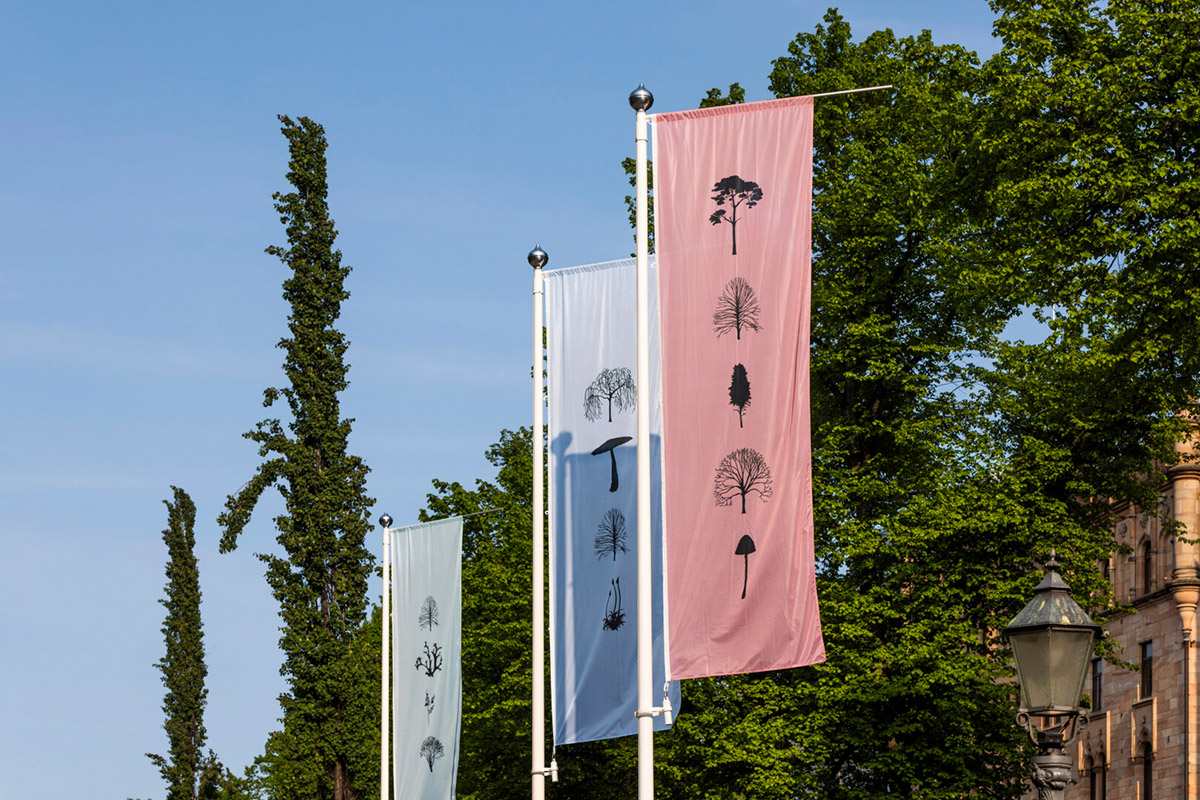
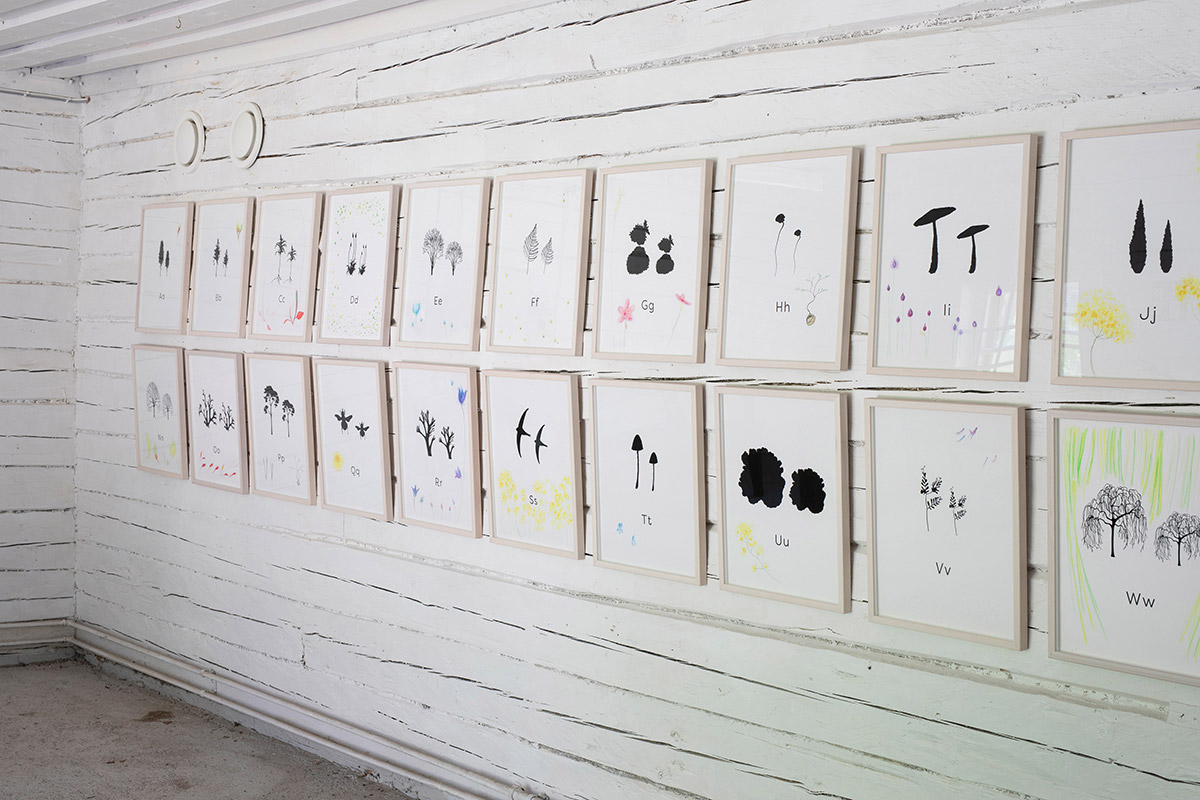
Katie Holten: Learning To Be Better Lovers (Forest School), 2025, detail. Helsinki Biennial 8.6.–21.9.2025, Vallisaari Island. Photo: HAM / Helsinki Biennial / Maija Toivanen
Javier’s community-based installation Earth, Water, Air, Fire, Void (2024) and Witness (2025) activated workshops with school children and local participants. They produced talismans to protect the trees (made out of cloth and recycled materials), emphasizing care through hands‑on practice.
All these projects show how participation reorganizes artistic production around responsibility, situated knowledge, and conditions of coexistence. Participation can be immediate or slow, viral or local, ceremonial or infrastructural, but in every case, it requires sustained facilitation, ethical attention to voice and access, and an acceptance of process as outcome. May these conditions be extrapolated beyond the human? That question opens the next chapter.
Participatory Practices with Non‑Humans
Can non‑humans be considered participants in collaborative or participatory practices? I will keep this question open. Across my curatorial trajectory I have worked with artists who engage interspecies relationships, challenging anthropocentric assumptions about agency, authorship, and participation.
A formative example from Hybris resulted from the collaboration between musician Nilo Gallego and shepherd Felipe Quintana. Felipe vuelve a casa con las ovejas sonando (1999) staged a sound action in the village of Bercianos del Real Camino with three hundred Churra sheep wearing bells. The everyday return of the flock was transformed into a concert without disrupting pastoral rhythms. Sheep were not symbolic stand‑ins but active participants: their movement, sound, and presence shaped the work and its temporal logic.
Other works in Hybris and beyond made non‑human needs legible through modest interventions designed for cohabitation. Asia Piascik and Monika Brauntsch proposed small insect hotels as refuges for urban pollinators, foregrounding care as participation. Kalle Hamm and Dzamil Kamanger’s Bug Rugs (2025) scaled this idea into four sculptural insect habitats that translate textile patterns into architectural shelter, embedding interspecies encounter in the urban landscape as part of the 3rd Helsinki Biennial.
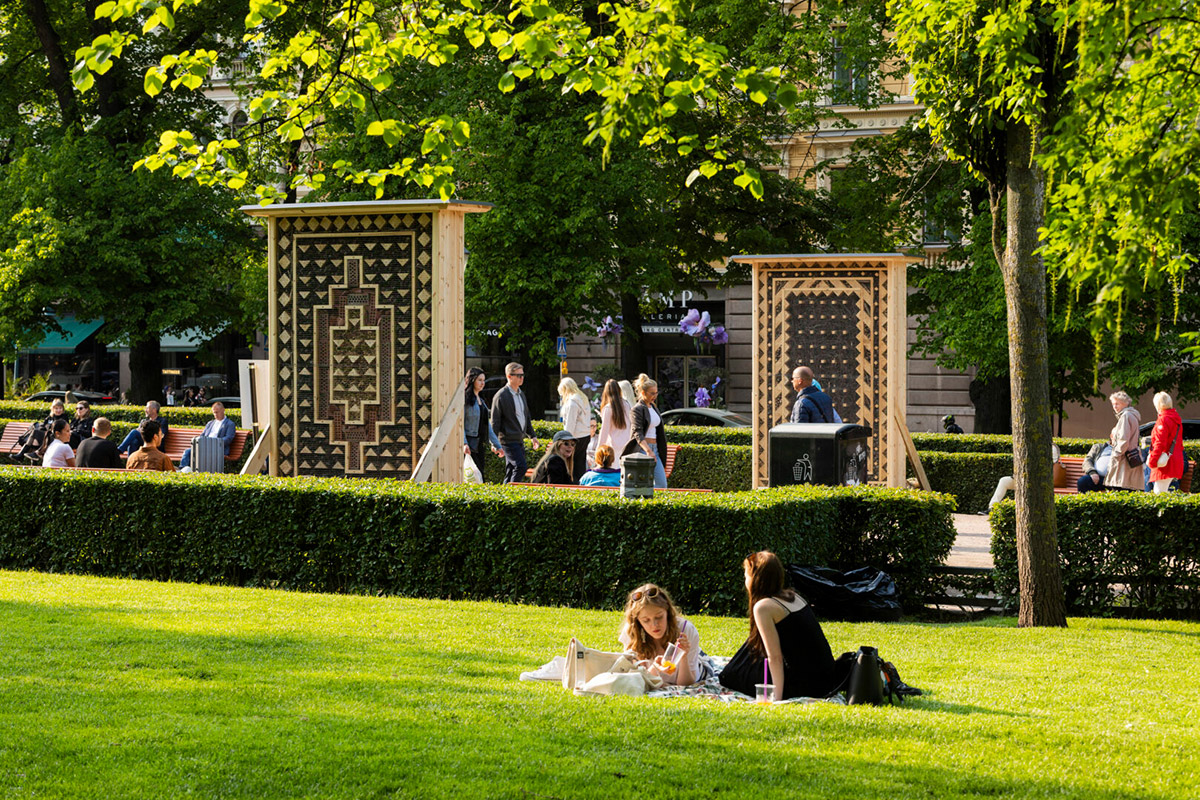
Kalle Hamm & Dzamil Kamanger: Bug Rugs, 2025, detail. Helsinki Biennial 8.6.–21.9.2025, Esplanade Park. Photo: HAM / Helsinki Biennial / Henni Hyvärinen
The Biennial reframed non‑human agencies as central curatorial actors. Tamara Henderson’s Worm Affair (2023) transmitted live audio from compost worms, making subterranean metabolic processes perceptible and positioning worms as co‑creators. Kristiina Koskentola’s Murder of Crows (2021) developed reciprocal bonds with a flock of crows; objects exchanged between birds and artist became co‑authored material traces. Nomeda and Gediminas Urbonas’s Futurity Island (2018 – 2025) converted drainage pipes into ultrasonic channels that rendered insect sounds audible, collaborating with scientists and architects to treat non‑human signals as knowledge. Band of Weeds’ The Weep of Trees (2025) translated tree stress chemistry into sound, amplifying vegetal responses and challenging plant blindness.
My curatorial projects have explored these plant-music crossings before. Concert for the Biocene (2020) staged a string quartet performing to an audience of plants in the Barcelona Opera House; the plants were later distributed to healthcare workers, enacting a gesture of care that extended beyond representational metaphor.
These cases do not resolve whether non‑humans can be full participants in the same sense as humans. Rather, they show how curatorial practice can open spaces where non‑human agencies are listened to, accommodated, and integrated into shared protocols. Such practices foreground care, reciprocity, long‑term commitment, and shared vulnerability. They relocate the artwork from representation into relation, process, and responsibility. Many questions still remain to be reflected on in this context.
How can we genuinely rethink our relationship with non-human entities and move from logics of use and extraction toward forms of collaboration and cohabitation with other species? Is it an “impossible possibility” to escape the anthropocentric paradigm, or can it be displaced, at least partially, through situated artistic practices? Furthermore, what kinds of artistic gestures are capable of shifting the anthropocentric gaze without simply replacing it with another totalizing framework?
Conclusion
In retrospect, all the analyzed curatorial projects tackled the value of collaboration and participation when addressing the current ecological anxieties. PRAXIS demonstrated how institutional experiments can reconfigure museum temporality, foreground process, and redistribute agency through reuse, open production, and visible co‑creation. Hybris showed that participatory practices can operate as socio‑ecological protocols that embed stewardship, legal and temporal commitments, and community care into artistic projects. The Water Office illustrated the workshop as an effective format for translating technical water knowledge into collective literacy and civic action. They manifest how participation beyond conventional frames can take multiple shapes alongside small contributions that alter living works over time. This includes Imbalance, where viral gestures may scale into movements, and design‑based interventions are meant for adoption and replication. The Helsinki Biennial illustrated different forms of empathic approaches to art as shelter and, as the title suggested, go beyond, look below, and feel ways of belonging to and becoming collective. Finally, multispecies projects challenge anthropocentric frameworks by treating other life forms as sources of knowledge and co‑actors in shared environments.
Another issue pertinent for participatory practice is that it redistributes responsibility. Curators must plan for sustained facilitation, inclusion, and care. It reframes outcomes as the process and protocol that are as important as the objects. Finally, participation exposes tensions between mediation, equity of voice, conservation, and safety, as the notion of legacy requires active negotiation. Public‑space participatory projects such as Mischa Kuball’s if walls could tell resonate with these lessons by treating urban surfaces as porous infrastructures for testimony, repair, and collective agency. Activating walls in the city demands attention to temporality, material aging, and local authorship; it requires the same ethical labor of listening, sustaining, and stewarding that participatory, multispecies, and workshop formats demand.
These projects do not offer definitive answers. They are laboratories for testing relations and practices that foreground care, repair, and shared responsibility. Curating participatory work therefore demands sustained commitment beyond programming: establishing infrastructures for maintenance and stewardship, documenting processes and outcomes for future use, and creating pathways for participants to take ownership. Ethically, it means attending to equity of voice, consent, and the distribution of benefits. Curating participatory projects is not episodic event‑making but an ongoing practice of enabling others to act, learn, adapt, and inherit sites of collective action in order to build common desirable futures.
Blanca de la Torre (PhD) is a curator, art historian and researcher whose professional work lies at the intersection of visual arts, cultural ecology, and sustainable creative practices. Her professional activity includes, in addition to curating exhibitions, artistic director of projects, seminars, workshops, curatorial residencies and international symposiums. She has published more than a hundred specialized essays in books, catalogues and magazines, and regularly participates in international conferences and symposiums on culture and sustainability. She has curated projects internationally in prominent Biennials such as Helsinki with Kati Kivinen and Cuenca, Ecuador, and exhibitions in MoCAB, Belgrade; Salzburger Kunstverein, Salzburg, Austria; EFA, Elisabeth Foundation Project Space, New York; the Center for the Arts of Monterrey, Mexico; the Carrillo Gil Museum in Mexico City; NC-Arte Bogota, Colombia; LAZNIA Center for Contemporary Art, Gdansk, Poland, Alcalá 31, Madrid; CentroCentro, Madrid; CAAM, Las Palmas de Gran Canaria; 516 Contemporary Arts Museum Albuquerque, EEUU, and the MUSAC, Contemporary Art Museum of Castilla y León, among others. Since April (2025), she is the Director of IVAM, Valencian Institute of Modern Art.