
- Download Issue 65 (US Letter, 7,8 mb) Buy as Book on Demand here (US) and here (DE)

by Lilia Nenescu
Access to Gardening in Public Spaces in Chișinău
In Chisinau, 80% of people live in blocks of flats, and only a few percent of those living in private houses have their own garden. At the same time, public spaces with gardening potential are constantly shrinking. Agricultural land in the city's urban and non-urban areas have been reduced since the Soviet period, when it was used for the construction of new neighborhoods. Until now, the lack of a general urban development plan, coupled with huge commercial pressure, has contributed, through various public land grabbing schemes, to the reduction of agricultural land used for food production, as well as for research and education in the agri-food sector.
At the moment, Chisinau does not have any legal mechanism to provide access to land for people who want to garden. However, there was a municipal legal framework in Chisinau that regulated gardening and guaranteed access to land for gardening from 1984-2005. In the absence of a municipal legal mechanism and a vision to meet this need, on the one hand we are witnessing an increase in informal gardening, and on the other hand, a reduction in land with gardening potential, which is being taken out of the agricultural and educational circuit and turned into land for residential purposes and commercial construction.
The only way for those who want to garden in public spaces in the city is to participate in the public auctions organized by the municipality and to propose a price for these plots of public spaces that would be higher than the bids offered by real estate companies with commercial interests, or, to start doing guerrilla gardening.
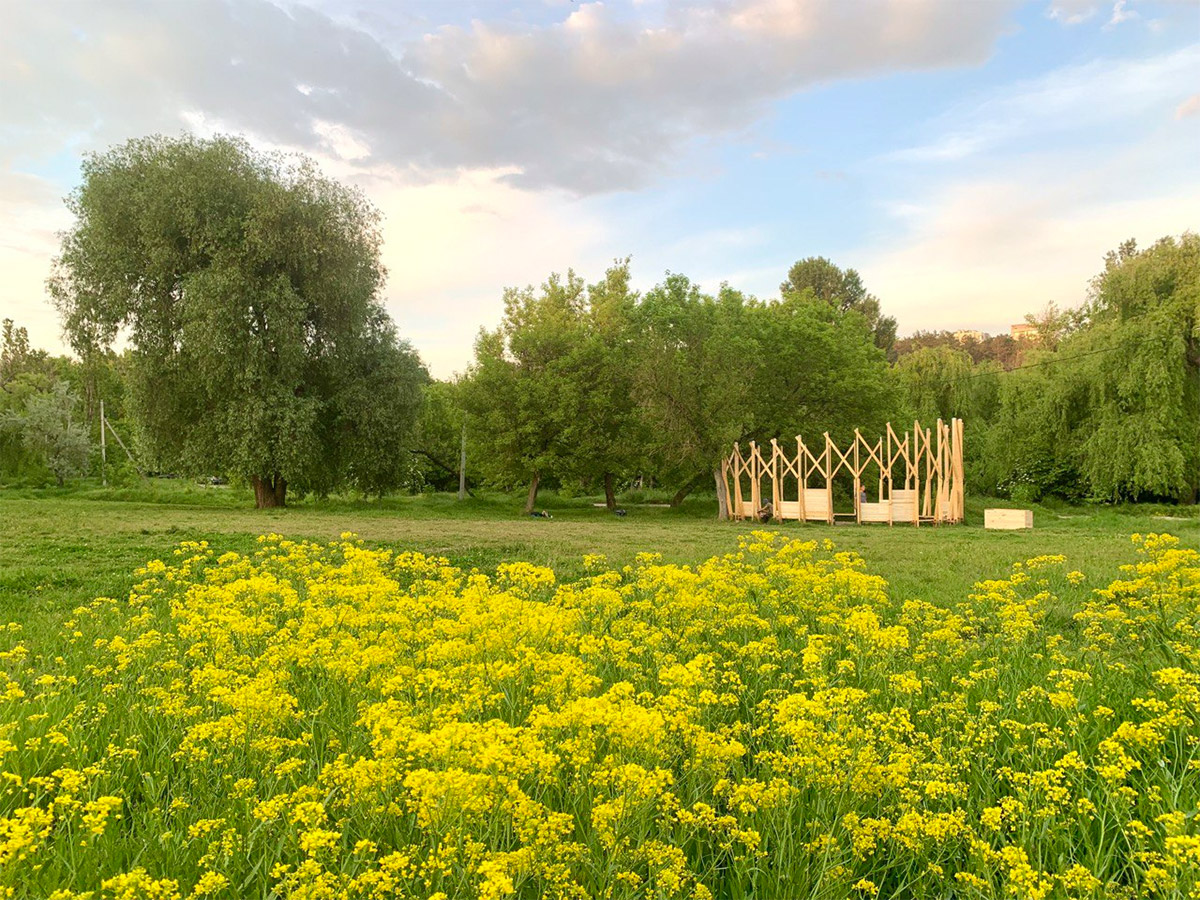
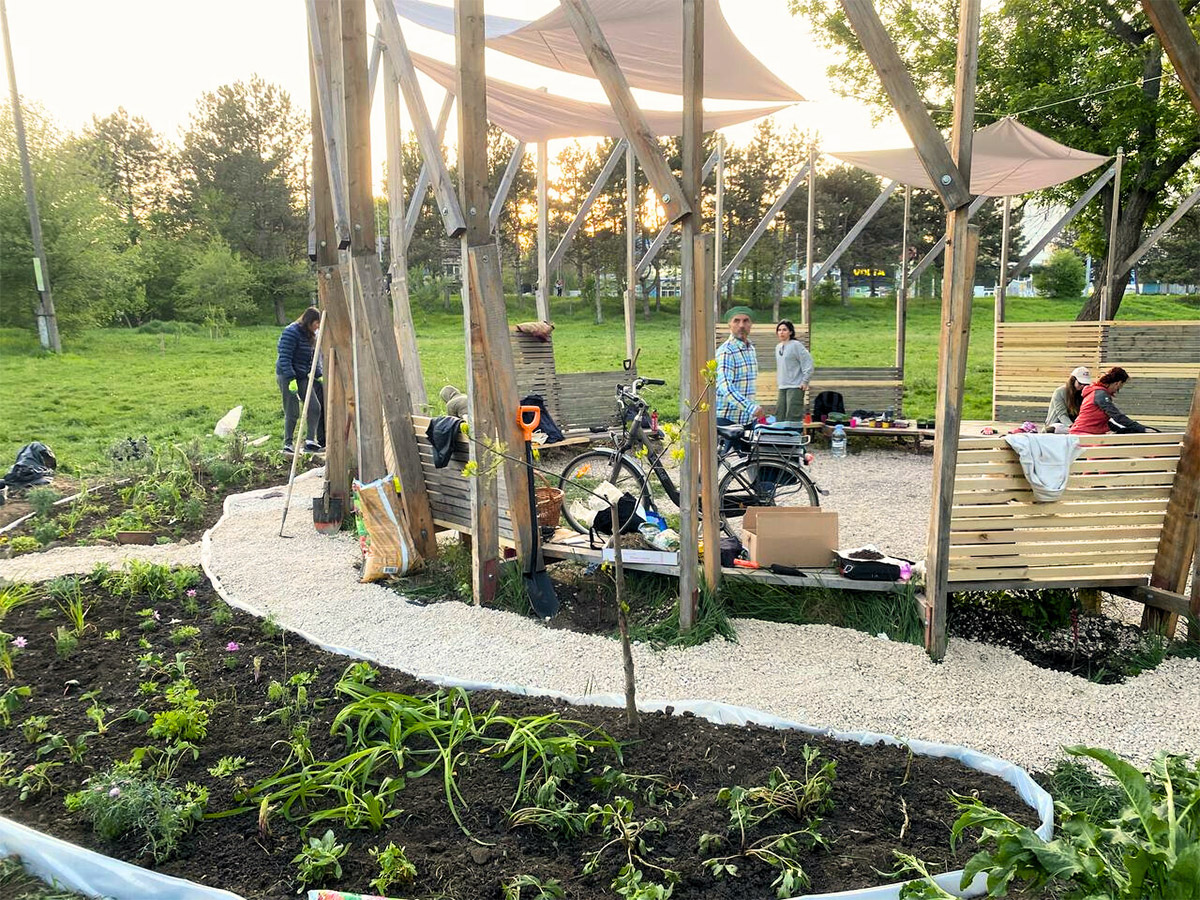
Comunitati Active pentru Democratie Participativa, workshop on urban food forest near the community pavilion in Calea Orheiului park, May 2025. Photo: Lilia Nenescu.
Although most people do not have access to spaces for gardening, many people still garden. Some garden on their balconies, others "adopt" certain plots of land and turn them into small gardens for home or family consumption. Thus, small gardens are set up in the courtyards of flat blocks, while larger gardens are the ones that are still kept and maintained by gardeners in the former urban gardens set up between 1984-2005 in public spaces. These include La Izvor Park (Buiucani), Talpa Gâștei Park (Poșta Veche), and in the space between Nicolae Milescu Spătaru and Ciocana Veche streets. Informal urban gardening practices speak convincingly of the need for residents to garden and grow their own food despite the lack of legal framework.
Understanding urban gardening as a grassroots-led claim over public land and spontaneous appropriation of neglected/threatened spaces, and through direct action and DIY practices, we have used urban gardening to protest against the privatization of three public green spaces in Chișinău, all of which are contested spaces at risk of privatization. These are; the Guerilla Garden in Central Park, around the former Guguță Caffe which has been a focal point of activist resistance since 2014, the Community Garden in the Circus Square and Orchard and the Raised Bed Garden in Poșta Veche district.
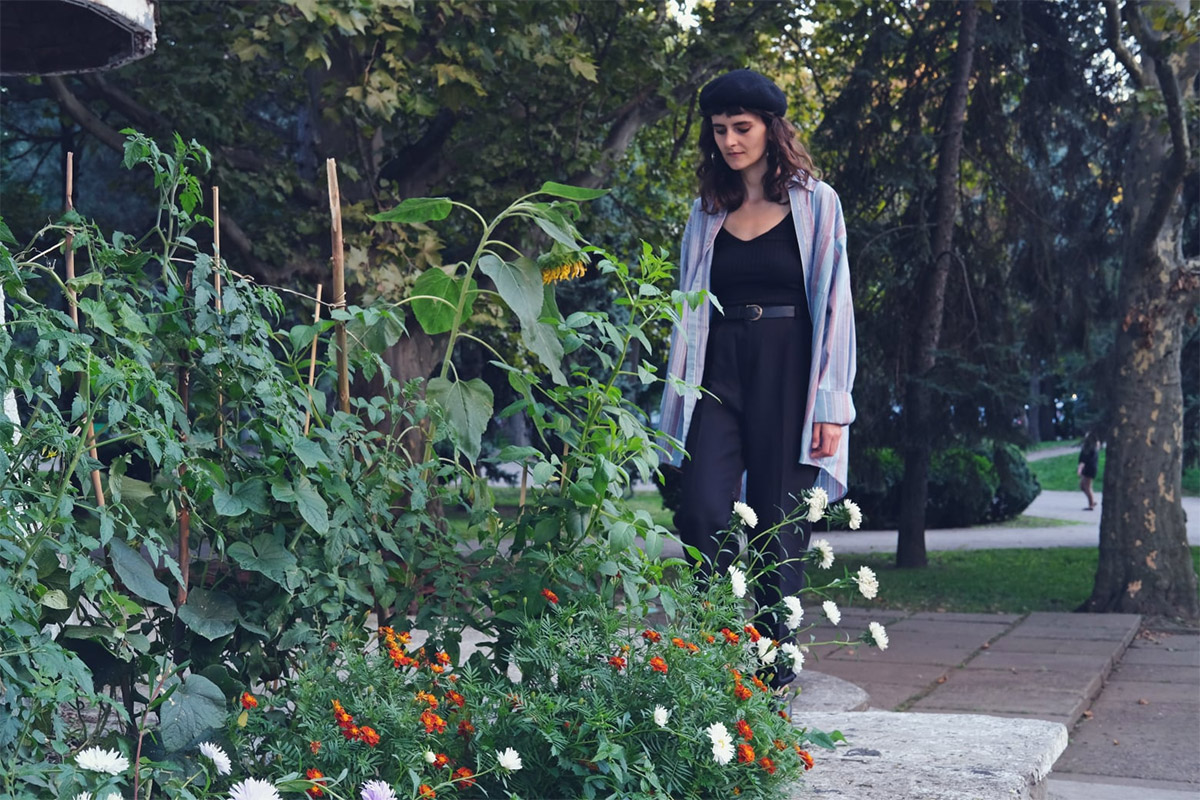
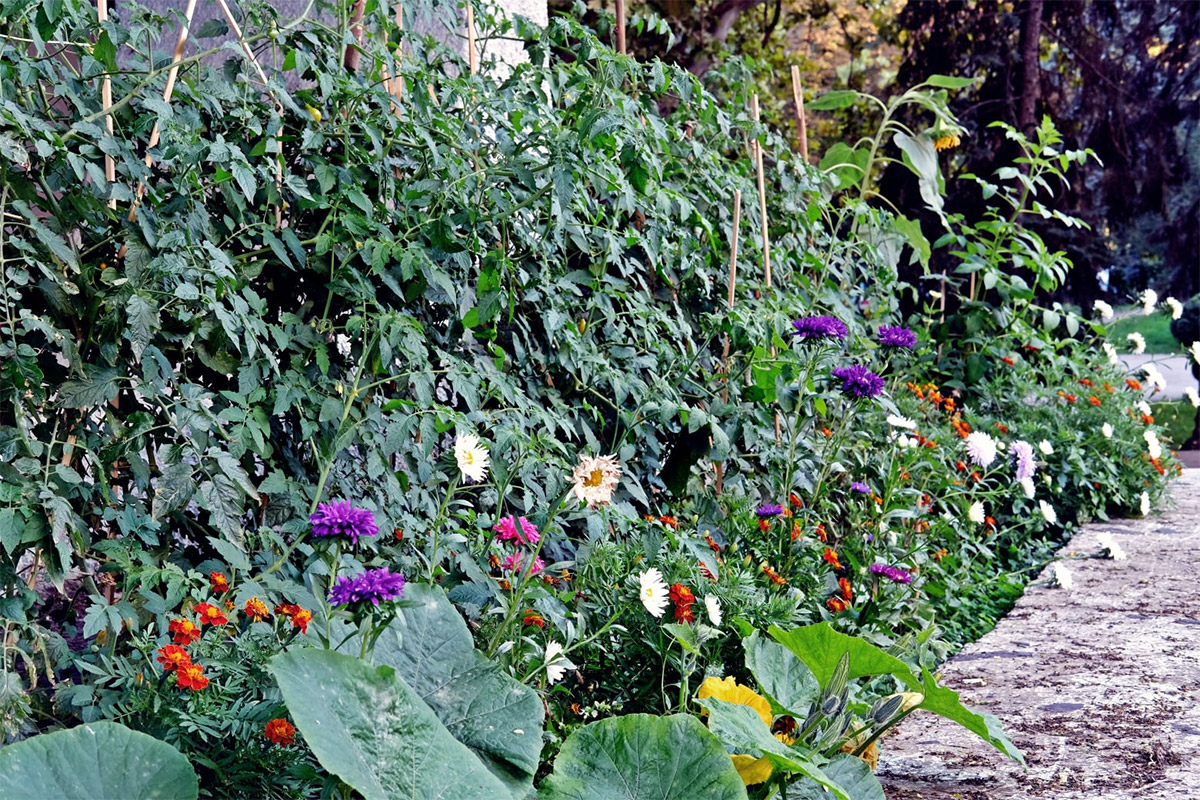
Lilia Nenescu, Guerrilla gardening in the central park, in the pocket garden of the former Guguta Cafe, july 2019. Photo: Vitalie Sprânceană.
In our practice, we use guerrilla gardening in the city not only as a tool to reclaim the right to the city but also as a tool to reclaim the right to the future. The urban garden opens up space for social interactions and discussions but also challenges our perceptions of how the city should look and what functions it should serve. It therefore provides the necessary ground to cultivate alternative visions of the world as a means to reimagine our cities. I noticed how different the attitudes of people towards gardening in the city are when I talk to them in the material space of the urban gardens versus the same discussions in environments such as conference rooms. In the gardens, nobody says that the gardens belong in the village, that the city is too polluted, and nobody asks; do you want to bring the corn field tothe middle of the city?”. In the garden, people ask what variety of tomatoes I planted, they share their worries about the drought and I share tomato seeds.
Lilia Nenescu is a researcher and artist with a distinct focus on the interplay between urban environments and the future of cities. With academic credentials in anthropology and labor law, Lilia bridges academia and activism through her work in urban gardening and placemaking. Her initiatives in Chișinău serve as poignant examples of grassroots resistance against the privatization of public spaces. Through direct action and community engagement, initiatives like the Guerilla Garden in Central Park and the Community Garden in Scuarul Circului underscore her commitment to transforming urban landscapes. Lilia’s endeavors extend beyond gardening; she explores sustainable urban futures in her children’s book, "Alexandra in the Chișinău City of 2050," and she co-wrote a thought-provoking animation scenario, "Let’s Change the City, Not the Climate: Chisinau in 2050." Her project "eat borders" further exemplifies her innovative approach to blending art with ecological activism, challenging conventional boundaries to promote radical transformation. Meanwhile, the installation "WASTELAND: a piece of idle land?" questions the relationship between urban development and nature. Throughout her career, Lilia has authored significant research on urban gardening and its potential to inspire solidarity and sustainable living, advocating for policies that facilitate access to public land.